中文
中文
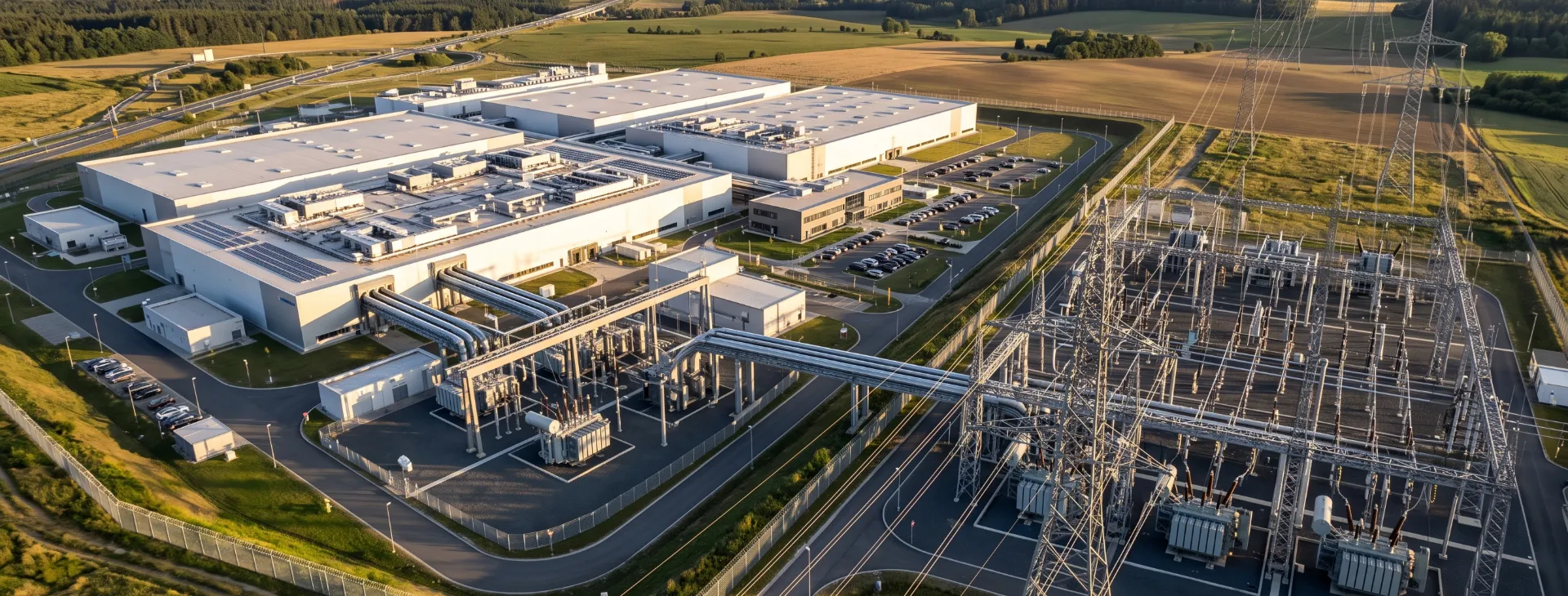


“Bring your own energy” is increasingly becoming a requirement rather than a choice for data center developers. As power constraints continue to shape where and how facilities are built, the tax consequences of energy decisions will become just as crucial as the engineering and operational considerations.
Tax Planning’s Importance
Power availability has arguably become the most significant constraint facing data center development. Projects increasingly face yearslong delays before sufficient power utility capacity is available. Proposed legislation in multiple jurisdictions could also require data center developers to generate 100% of the electricity their facilities consume. Data center owners and developers must plan for a bring your own energy, or BYOE, model in response.
BYOE requires much more capital investment than a traditional data center model. These expenditures can materially affect project returns. A site that’s economically attractive based on land, incentives, and customer demand may become more expensive to develop once the owner is required to build a private power solution.
Proper tax planning wouldn’t eliminate those costs, but it could increase after-tax cash flow and reduce the overall cost of investment.
While BYOE is often viewed as an operational or infrastructure challenge, it’s also becoming a key tax planning issue. Decisions about generation technology, ownership structure, procurement, and project timing can determine whether a developer qualifies for valuable federal tax credits, accelerated depreciation, and other incentives. Because these decisions are often made early in the development process, tax planning should occur alongside engineering and design, not after construction begins.
Focus on 48E
Section 48E, the clean electricity investment credit, may provide the greatest opportunity for data center developers to directly offset much of their upfront BYOE investment. Depending on the construction facts — including the technology, ownership structure, labor compliance, sourcing, and project timing — Section 48E may provide a federal tax credit equal to 30% to 50% or more of the eligible investment in qualifying energy storage property and qualifying clean electricity generation.
Battery energy storage equipment may present the most universally applicable opportunity for data center developers to claim a Section 48E credit. Campuses that use standalone batteries for resilience, peak-load management, or power quality may qualify even when the batteries draw electricity from the grid or nonqualifying generation sources. The credit generally applies to the eligible basis of the qualifying battery property.
The power-generating equipment installed in a BYOE data center project may also qualify for the Section 48E credit, but the technology must result in a net-zero greenhouse gas emissions rate. Eligible technologies can include traditional solar and wind power (typically must be placed into service by the end of 2027 to qualify), as well as qualifying nuclear, geothermal, and hydropower (generally eligible for credits through 2035).
For a BYOE data center project, selecting a qualifying zero-emission generation technology instead of a conventional natural-gas system could provide meaningful tax benefits and materially improve the project’s overall economics. Maximizing the credit depends on:
- The technology selected
- The construction and placed-in-service dates
- The eligible tax basis
- Satisfaction of the applicable labor and other credit requirements — including those related to prevailing-wage and apprenticeship, domestic content, and specific energy-community locations
Developers should evaluate these requirements during design and procurement to maximize the opportunity rather than after construction, when it may be too late.
Although Section 48E may provide the most visible tax benefit for qualifying energy investments, it’s only one component of a broader tax strategy. Even when certain power assets don’t qualify for energy credits, developers may still realize significant tax savings through accelerated depreciation, repair deductions, and state and local incentives.
Avoiding Blind Spots
The most successful projects will be those that evaluate energy tax credits, depreciation strategies, repair deductions, and state and local incentives as part of a coordinated tax plan rather than as separate after-the-fact exercises. Integrating tax planning into the design and procurement process can improve cash flow, enhance project economics, and help avoid costly missed opportunities.
The following table provides a line of sight into additional tax considerations.
| Topic | Key Mechanism | Primary Benefit | Key Consideration |
|---|---|---|---|
| Accelerating Cost Recovery Through Tax Depreciation | Cost segregation study to classify components into shorter recovery periods; 100% bonus depreciation | First-year deduction of 40% to 60% of capital investment; improved cash flow | Especially valuable for BYOE assets (such as natural gas generation) that don’t qualify for clean-energy credits |
| Applying the Tangible Property Regulations to Data Centers | Comparing scope of work against the “unit of property” to distinguish repairs from capital improvements | Immediate deduction of larger expenditures (such as tenant fitouts and infrastructure projects) as repairs | Useful for taxpayers with a Section 163(j) real property election who have lost bonus depreciation on qualified improvement property |
| Additional Tax Savings at the State and Local Level | Reviewing state/local incentive statutes; embedded intangibles studies | Sales/use tax exemptions, property tax abatements, utility incentives; permanent property tax reduction | Incentive statutes may narrowly define qualifying equipment, limiting eligibility |
Planning Ahead
The greatest tax benefits are often determined well before construction begins. Decisions made during project design, procurement, contracting, and ownership structuring can affect eligibility for energy credits, depreciation deductions, and state and local incentives. Before construction begins, developers should consider:
- Which entity will own each asset
- Which technologies may qualify for Section 48E
- Whether the project can satisfy labor and sourcing requirements
- Which assets may qualify for accelerated depreciation
- Whether cost segregation should be integrated into project cost tracking
- Whether state and local incentives apply
- How tax benefits and recapture risks will be allocated among the parties
Engineering, procurement, and construction contracts and construction cost reports often group major costs into broad categories. Many tax planning opportunities become difficult (or impossible) to recover once equipment has been purchased, contracts have been executed, construction is underway, and assets are capitalized.
Developers that involve tax advisers early in the project lifecycle will better position themselves to maximize available incentives, minimize compliance risks, and avoid the “buyer’s remorse” that can result from discovering valuable tax benefits after key decisions have already been made.
This content was originally published in Bloomberg Tax.