Italiano



Metals and specialty manufacturing M&A remains active in 2026, but the key drivers have shifted. Three years ago, deal activity in aluminum and steel processing largely tracked the commodity cycle: pricing, demand, and available capital. Today, a more reliable predictor of who gets bought and at what multiple is how defensible a company’s supply chain looks against disruption.
That shift shows up in three places at once: (1) cross-border consolidation among extruders and fabricators, (2) federal government capital committed to rebuilding primary aluminum production, and (3) buyers underwriting deals around geographic and feedstock diversification, as well as capabilities expansion, rather than scale alone. Together, they point to a structural change in how the market prices metals businesses, not strictly a cyclical one.
What’s Different From a Few Years Ago
The post-2021 reshoring narrative was, with the benefit of hindsight, largely aspirational. Tariff actions and “Buy American” rhetoric raised the topic, but the capital to act on it was thin, financing was generally expensive, and many buyers still underwrote deals on the same cost and scale logic that had governed metals M&A for two decades.
That thesis is now backed by capital and by policy, not just by sentiment. The Department of Energy has put substantial money behind primary aluminum production for the first time in nearly half a century. Commerce has built a tariff structure that specifically rewards committed domestic capacity rather than blanket protection. And buyers, both strategic and financial, are showing they will pay a premium for platforms that reduce a customer’s single-source or single-country exposure even when the underlying commodity cycle is unremarkable. The difference between 2022 and 2026 is that resilience has moved from a talking point in a management presentation to a true valuation driver.
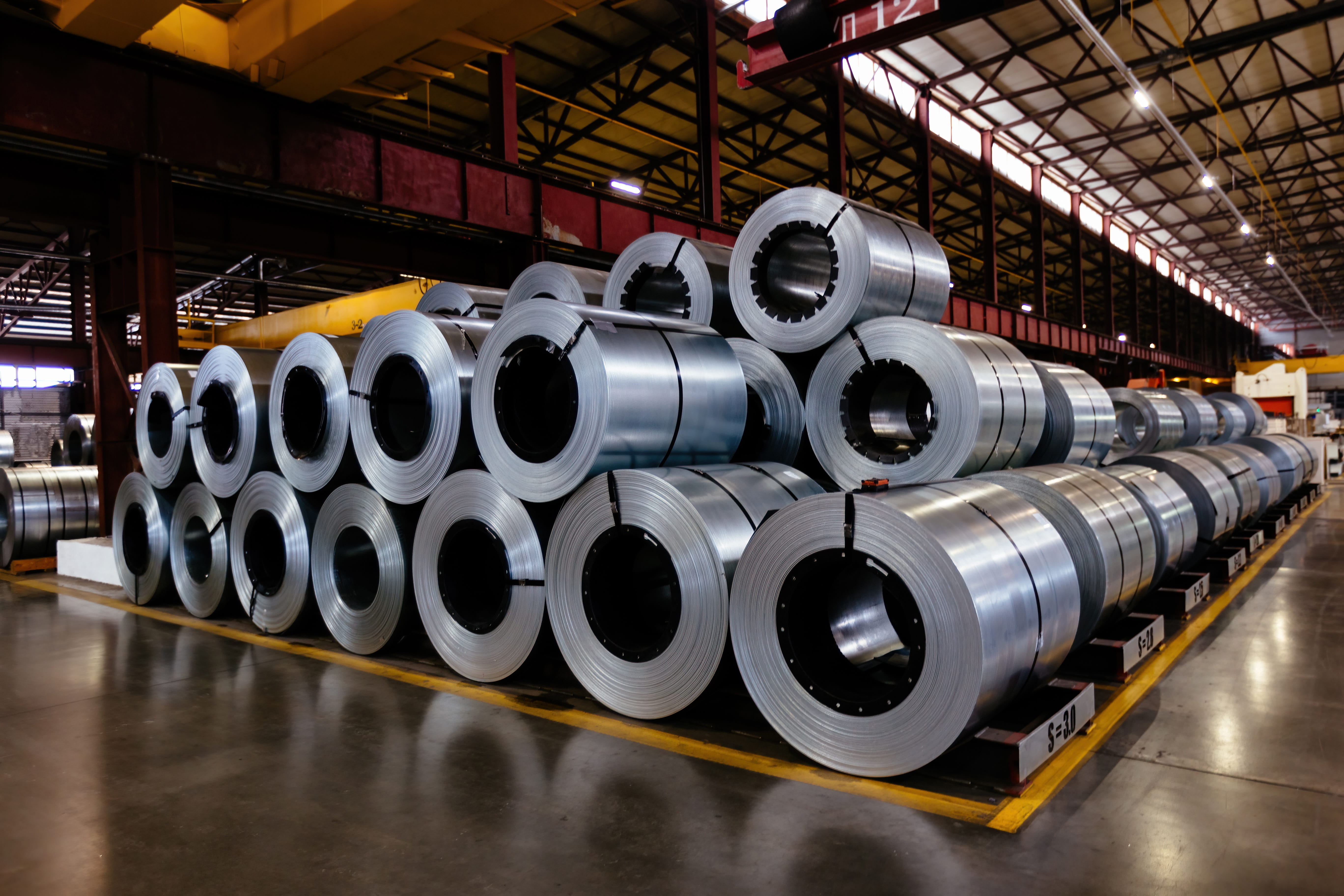
The pricing data backs this up in real time. Hot-rolled coil is trading near four-year highs, and the Section 232 tariff has decoupled steel coil pricing from scrap, widening the hot-rolled-to-busheling spread. Aluminum’s Midwest premium, the surcharge domestic buyers pay over LME pricing, recently climbed to $1.12 per pound, up $0.41 year over year, precisely because the two largest sources of U.S. primary aluminum imports, Canada and the Persian Gulf, are each tangled in an active trade dispute or military conflict. US-Canada trade talks broke down in late August, and Canada responded by doubling its counter-tariffs on American steel and aluminum to 50%. Two allied, deeply integrated economies saw their trade relationship deteriorate inside a single negotiating cycle. That is the environment buyers are underwriting against, not a scenario they are modeling for effect.
The multiples back this up too. A September sector report tracking metals-manufacturing M&A activity found 138 transactions year-to-date, up 40.8% year over year, with average disclosed multiples rising to 11.2x EV/EBITDA for 2025 through year-to-date 2026, compared with 8.6x during 2023–2024. The recovery is concentrated in scaled, differentiated businesses exposed to defense, data centers, power generation, and reshoring, not undifferentiated commodity shops.
Consolidation Is Moving Up-Market and Across Borders
A clear signal of the structural change in market pricing of metals business came in September. Grupa Kęty, the Warsaw-listed aluminum group, signed a conditional agreement to acquire Metra from KPS Capital Partners for up to €645 million in enterprise value. Metra operates nine plants across Italy, the United States, and Canada, and generates more than 45% of its revenue in North America. A European strategic buyer is paying up for a business whose primary value includes the U.S. and Canadian footprint and the access it provides to defense-adjacent rail and architectural end markets. That is a buyer purchasing geography and diversification as much as capacity.
The pattern extends to the middle market. Insight Equity’s acquisition of Alwood, a privately held aluminum extrusion and component supply business, reflects the same logic. Sponsors are underwriting platforms that manage supply chain complexity for their customers, sourcing across offshore mills while offering domestic engineering and finishing, rather than businesses that simply extrude and ship.
A third transaction makes the point sharply; Can-Art Aluminum Extrusions acquired BRT Extrusions, combining a Brampton, Ontario, extruder with a press and finishing operation in Niles, Ohio. The combined organization will run 15 extrusion presses and value-added capabilities spanning wet paint, powder coating, fabrication, and anodizing across 10 locations and more than 1,000 employees, putting extrusion and finishing capacity on opposite sides of a tariff line. A company that owns capacity on both sides of that border is not exposed to whichever way the next round of tariffs breaks; a company that owns capacity on only one side is. That is a different rationale than Kęty buying Metra for scale and end-market diversification. Can-Art is buying insulation from a specific, currently deteriorating trade relationship, and it is a clear example of resilience being underwritten at the transaction level.
Across all three transactions, the theme holds: multi-site, multi-country manufacturing capacity has become a strategic asset that buyers will pay for directly, not an operational footnote to a scale argument.
Washington Is Underwriting the Primary Aluminum Supply Chain
In July 2026, the administration introduced a conditional tariff mechanism: companies that submit an approved plan to build, expand, or refurbish primary aluminum smelting capacity, and commence construction before January 2029, qualify for a reduced 25% Section 232 rate rather than the standard 50%. It is a targeted incentive for committed capital, not a blanket tariff cut.
Behind that mechanism sits substantial federal spending. The Department of Energy has committed up to $500 million to Century Aluminum’s joint venture with Emirates Global Aluminium to build a primary smelter in Inola, Oklahoma, targeting 750,000 tons of annual capacity, including high-purity aluminum for defense applications. If completed, it would be the first new U.S. primary aluminum smelter in nearly 50 years and would approximately double current domestic primary output.
U.S. primary smelting capacity has fallen from 24 operating lines in the 1980s to four today, running at roughly half of installed capacity because of electricity costs, not demand. Even a completed Inola project, combined with every currently idled smelter restarting, would likely leave the United States 40–50% import-dependent on primary aluminum. The binding constraint is not capital; instead, it is securing a competitively priced, decade-long power contract in a grid increasingly competing with data center demand.
Regarding M&A, policy has made domestic primary production and downstream processing more economically viable than it has been in decades, but the timeline for meaningful new supply is measured in years, not quarters. That gap illustrates why buyers are solving for supply chain security through acquisition now, rather than waiting for policy to close it.

Data Centers Are Bidding for the Same Capacity
There is a second force slowing down the resolution of supply chain risk, and it shows up directly in September’s metals data. Construction spending in the Census Bureau’s “office” category (which includes data centers and is increasingly being driven by data center construction) rose from $86.6 billion in 2021 to an annualized rate of $140.1 billion in July 2026.
Over the same period, spending on traditional manufacturing facilities has fallen sharply from its 2024 peak of $233.2 billion, when semiconductor plants and other projects funded under the CHIPS and Science Act, the Infrastructure Investment and Jobs Act, and the Inflation Reduction Act were driving the category. Manufacturing construction spending was down more than 22% year over year in the first half of 2026. Capital that built factories four years ago is building data centers now.
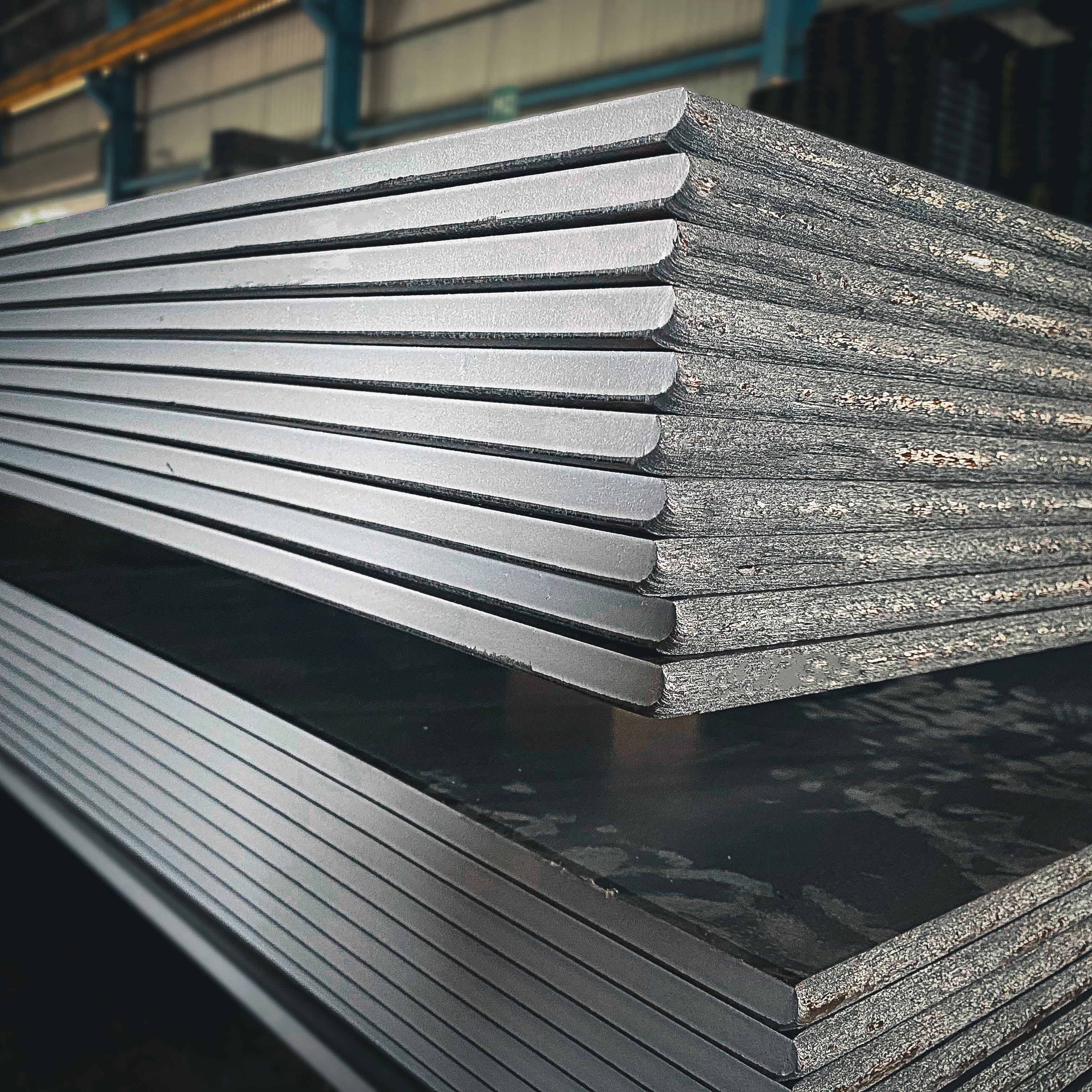
That shift is a near-term demand tailwind for specific steel categories. Plate, structural tubing, rebar, and merchant bar producers have each cited data center construction, alongside infrastructure and power transmission, as a primary source of current market strength, even while broader nonresidential construction spending is flat to down. Plate mills are controlling order entry so tightly that spot tonnage is already being quoted for January and February 2027 delivery, leaving buyers with essentially no near-term pricing leverage.
A distributor or fabricator with a genuine specialty or heavy-plate and alloy niche, rather than commodity coil, is sitting on a scarcity position that a buyer cannot replicate simply by adding capacity elsewhere in the near term. Service centers report the same pattern on the stainless side: data center demand is currently masking softness in construction and appliance end markets that would otherwise be showing up in the numbers.
Copper is caught in the same dynamic, and arguably more pronounced. This year’s record COMEX pricing reflects power grid expansion and electrification demand competing for supply alongside tariff-driven stockpiling. The underlying numbers are more extreme than aluminum’s: J.P. Morgan projects a U.S. refined copper deficit of roughly 330,000 metric tons this year, the U.S. designated copper a critical metal in 2025, and a new mine still takes roughly 17 years from discovery to first production.
China controls roughly 40% of global smelting capacity while importing two-thirds of the world’s mined concentrate, the same processing-concentration risk already playing out in aluminum. And the grid problem is, if anything, worse than the direct demand: multiple analysts covering the buildout note that delivering power to a data center can require more copper in transmission lines, substations, and transformers than the facility itself consumes.
No copper transaction has delivered a Kęty-Metra moment yet, but the deficit math says one is coming. Expect the same buyer logic, geographic diversification, feedstock security, and multi-site consolidation to reach copper wire and cable, rod and tube, and scrap and recycling platforms next, for the same reason it already has in aluminum and steel: the fix is years away and buyers don’t want to wait for it.
Data centers are also a direct competitor for the one input, electricity, that determines whether new primary aluminum capacity gets built at all. A single 750,000-ton smelter needs roughly 11 terawatt-hours of power a year, and needs it priced near $40 per megawatt-hour to be economically viable. Data center operators are currently bidding upward of $115 per megawatt-hour for power in the same regions. The Inola, Oklahoma, smelter has cleared its federal funding and its tariff incentive and is still waiting on a power contract for this reason.
That is why certainty commands a premium beyond what the aluminum policy timeline alone would suggest. The fix for import dependence is competing for capital and for grid capacity with the fastest-growing category of industrial construction in the country, on a multi-year timeline that neither side controls unilaterally. In the meantime, sellers and buyers positioned to capture the data center halo effect directly, plate producers, structural tube and hollow structural section (HSS) manufacturers, and fabricators serving power transmission and grid infrastructure, are pricing in a demand certainty today that has little to do with when new primary capacity comes online.
Supply Chain Security as an Underwriting Thesis
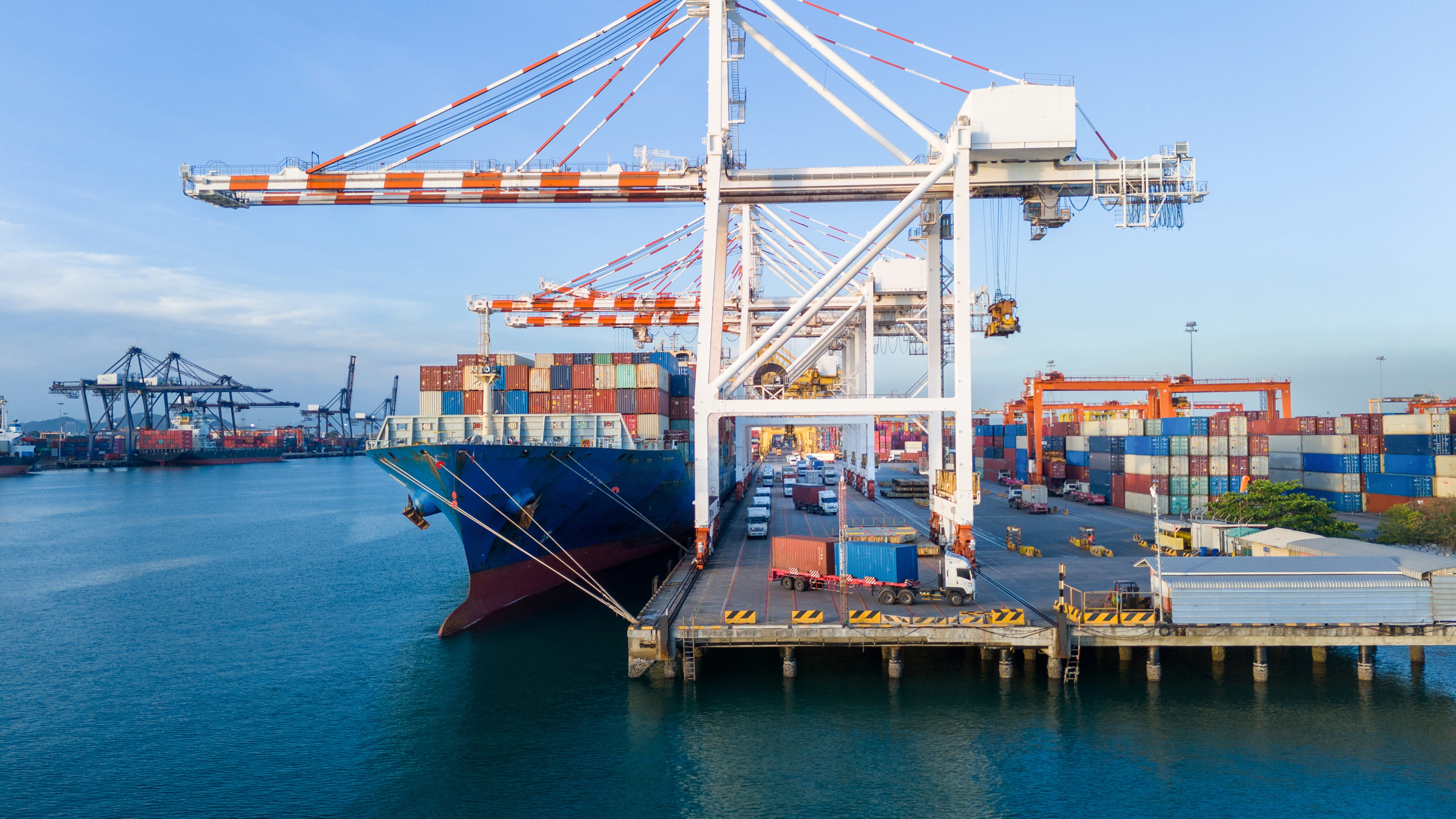
Put these trends together and a clearer buyer thesis emerges. Acquirers in metals and specialty manufacturing are underwriting geographic diversification, feedstock and scrap access, multi-country manufacturing footprints, and exposure to defense and critical infrastructure end markets as distinct sources of value, separate from EBITDA growth or cost synergies.
That shift is already showing up in deal activity. Feedstock access and supply chain resilience are increasingly important considerations in strategic acquisitions across the aluminum industry. Reynolds Consumer Products’ recent acquisition of Owl’s Head Alloys, an established secondary aluminum alloy recycler and ingot producer, illustrates how these considerations are influencing investment decisions beyond traditional metals companies. The acquisition provides Reynolds with an established operating platform in secondary aluminum production, creating opportunities to strengthen supply chain integration, leverage recycling capabilities, and support long-term strategic growth. The transaction also reflects the broader recognition that recycling infrastructure and domestic manufacturing capabilities can represent important sources of competitive advantage.
This is a departure from the roll-up or “buy-and-build” logic that dominated the sector for the better part of two decades, where primary underwriting questions were how much cost a combined platform could take out and how much reward is “capturable” from scale and diversification. Those questions still matter, but now sit alongside another one: how exposed is this business, or its customers, to a single plant, a single country, or a single tariff schedule? Businesses that can answer that question well are trading at a premium. Businesses that cannot are increasingly financed through structure, earnouts, or bridge capital, often at lower risk-adjusted multiples rather than a clean sale.
The data center dynamic adds a third question that buyers are underwriting: does this business have near-term, capturable exposure to the one end market currently absorbing excess capital and demand risk? For example, a plate or structural tube producer with data center-adjacent volume is being underwritten differently today than the same business would have been priced eighteen months ago, independent of anything happening in primary aluminum policy.
The same logic is extending downstream. Precision processors that convert plate, coil, and bar into finished, close-tolerance product, slitting, cutting-to-length, blanking, and similar value-added steps, are increasingly underwritten less as commodity converters and more as the connective tissue between primary producers and the manufacturers who need a documented, resilient chain of custody. That is especially true where the footprint spans multiple facilities and, in some cases, the U.S.-Mexico border under The United States-Mexico-Canada Agreement (USMCA) rules of origin. It is a category the market has historically priced on throughput and margin alone, and it looks underpriced relative to where the broader resilience thesis is heading.
What We’re Seeing in the Deal Markets
Stout’s own transaction activity this year largely reflects the same pattern. Fabral’s sale to McElroy Metal, Accurate Perforating and Accurate Metal Fabricating’s sale to Alabama Metal Industries (a Pacific Avenue Capital platform), Powder Coat II’s sale to Mitre Peak Capital, Insight Equity’s acquisition of Alwood, and RCP’s acquisition of Owl Head Alloys transacted because the target offered a buyer something defensible on supply chain grounds: multiple facilities, diversified end markets, value-added finishing capability, or a physical presence in feedstock that is difficult and slow to replicate or reshore. That pipeline is active. For example, several additional mandates now underway are being built around this same thesis and will speak for themselves once they reach the market.
What This Means Going Forward
For owners, the underwriting bar has moved. A single-site or single-customer business will see that reflected in valuation even in a strong overall M&A market, and it is worth addressing before a process starts rather than during one.
For strategics, Grupa Kęty’s willingness to pay for U.S. and Canadian footprint ahead of any realized synergy signals that domestic and near-shore capacity now carries value on its own terms. For sponsors, the federal incentive structure creates a defined window, construction commencing before January 2029, to build platforms positioned ahead of that deadline rather than after it.
For owners with real exposure to plate, structural tube, rebar, or power transmission end markets, the current data center-driven demand is a near-term certainty premium worth quantifying in a process now, separate from and faster-moving than the multi-year primary aluminum timeline.
The next 18 months of metals and specialty manufacturing M&A will largely be a referendum on how much certainty in the supply chain is actually worth to a buyer. Based on what has priced so far in 2026, the answer is this: more than it used to be.